%20-%20TRANSPARENT2a.png)
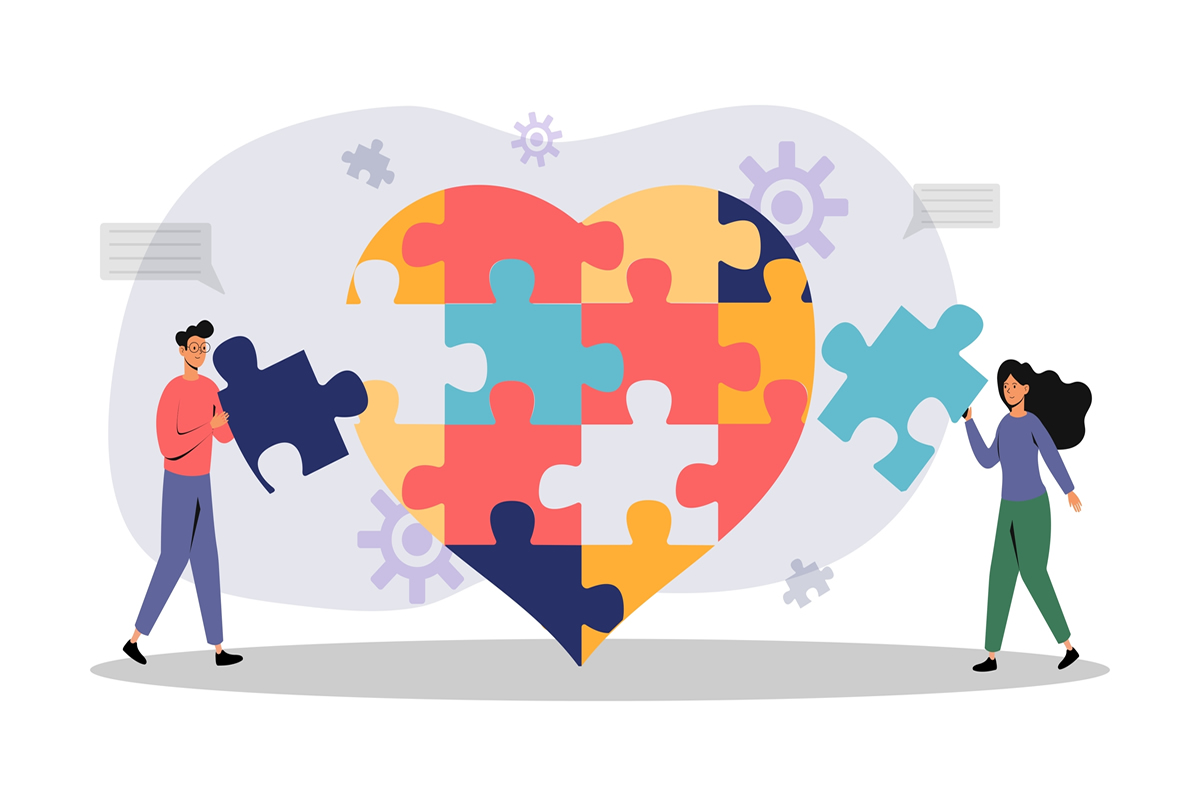
Every community shares the same goal: healthier families, stronger neighborhoods, and people living with hope and purpose.
Yet most face a common challenge. Churches, nonprofits, healthcare providers, schools, businesses, funders, and government agencies are all working hard—but rarely together.
When organizations operate in isolation, communication breaks down, services overlap, resources are wasted, and people fall through the cracks.
There is a better way. By collaborating, we can create a community-wide approach to address the complex issues facing our communities. This is where the "connected community" comes into play.
A connected community is one where organizations choose collaboration over isolation. Here's what that looks like in action:
Instead of competing for attention and resources, connected communities work together to create something far greater than any single organization could achieve alone.
Because the truth is, no one organization can solve complex challenges like poverty, hunger, homelessness, addiction, or mental health on its own.
Real transformation happens when everyone works together. And that changes everything.
Stronger communities aren't built by simply adding more organizations — they're built when those organizations unite.
When communication flows freely and partnerships flourish, the impact is extraordinary:
The question is no longer, "What can my organization accomplish?"
It becomes something far more powerful:
"What can we accomplish together?"
That's where the magic happens.
Strong communities don't rely on a single organization to drive change — they bring together every sector, every voice, and every resource available:
Each organization brings something unique to the table — deep expertise, trusted relationships, dedicated resources, or a powerful network. No single organization can do it all.
But when these diverse sectors align around a common vision, something extraordinary happens. Gaps are filled. Duplications are eliminated. And the community as a whole becomes far greater than the sum of its parts.
Relationships are essential—but relationships alone aren't enough to drive lasting community change.
Communities also need the right technology to keep partners meaningfully connected every single day, not just during scheduled meetings or annual convenings. Without a shared digital infrastructure, even the strongest partnerships can struggle to translate good intentions into coordinated action.
A shared technology platform, such as CharityTracker, provides organizations with the tools they need to work together seamlessly and effectively. With the right system in place, partners can:
When technology is designed with collaboration in mind, it becomes more than just a tool — it becomes the connective tissue that holds a community ecosystem together. It transforms relationships into systems, and systems into results.
Technology becomes the enduring infrastructure that supports collaboration long after the meetings end and the strategies are set in motion.
Working together requires more than good intentions. It takes alignment, commitment, and a clear sense of direction. Here's what that looks like in practice:
A shared strategy isn't just a planning document — it's a commitment to collaboration and the foundation upon which lasting community change is built.
Communities across America are proving that this approach works — and the impact is undeniable.
When collaboration, connected technology, and shared strategies align, something powerful takes shape. Organizations that once operated in silos begin moving in the same direction. Communication improves. Resources are used more effectively.
And the people who need support most begin receiving it in a way that is more consistent, more comprehensive, and more meaningful than ever before.
The greatest resource in any community isn't funding or technology — it's the people and organizations already showing up every day, dedicated to making a difference.
When those people and organizations become truly connected — sharing information, aligning their efforts, and working toward common goals — extraordinary things become possible. Communities grow stronger. Families are lifted up. And lasting, meaningful change takes root.
Creating a connected community doesn't happen overnight.
It starts with a vision.
It grows through trusted relationships.
It is strengthened by connected technology.
And it succeeds through consistent collaboration.
That's where Simon Solutions comes in.
For nearly two decades, we've helped communities build the connected infrastructure they need to unite organizations, improve communication, strengthen collaboration, and create lasting community impact.
Our solutions help communities move beyond isolated efforts and toward a coordinated network of care—where organizations work together, resources are maximized, and more people thrive.
Creating a connected community doesn't happen overnight. It's a journey that unfolds in stages, each one building on the last:
Our solutions help communities move beyond isolated efforts and toward a fully coordinated network of care — where organizations work together seamlessly, resources are used wisely, and more people get the support they need to thrive.
The challenges facing our communities are real — but they don't have to be faced alone. When churches, nonprofits, healthcare providers, schools, businesses, foundations, and government agencies unite around a shared vision, the impact is profound.
Help reaches people faster. Trust deepens between organizations. Funders gain clear visibility into the difference their investments are making. And fewer people fall through the cracks.
That's the power of a connected community. With the right tools, the right partnerships, and a shared commitment to change, building something truly meaningful is within reach. The path forward starts with coming together — and taking that first step.
