%20-%20TRANSPARENT2a.png)

Something powerful is happening in your community, and your enthusiasm for CharityTracker is proof. But this isn’t just about adopting a new tool—it’s about fostering connections, building trust, and unlocking the care and compassion already present in your churches, nonprofits, and local agencies.
In this blog, we’ll explore how a connected care network can help neighbors move forward together, the challenges that come with change, and how our Community Impact Specialists support you every step of the way. Let’s dive into how meaningful transformation begins.
The strongest networks don’t begin with software or tools. They begin with relationships—genuine, intentional connections with others who share your vision. To start building a meaningful network, reach out to the helping agencies you already know—churches, food pantries, nonprofits, and service providers who are equally committed to serving the community.
These are the people and organizations already doing good work, often behind the scenes. Pick up the phone. Schedule a coffee meeting. Take the time to get to know them better. Trust is the foundation of any strong collaboration, and it starts with small, intentional steps.
Here’s a simple yet powerful way to spark an inspiring conversation and ignite the potential for real change:
“What if every church, nonprofit, and agency in our community stopped working alone—and started working together? What if we shared our knowledge, our resources, and our care? Imagine a connected network where no one falls through the cracks, where help arrives faster, and where lives are genuinely transformed.”
This kind of conversation has the power to open doors, foster meaningful connections, and build momentum that goes beyond individual efforts. It’s an invitation to unite around a shared mission, creating something bigger and more impactful than anyone could achieve alone.
And often, it all begins with a single conversation—one that could spark a movement that truly changes lives.
Collaboration is far more than just a popular buzzword—it’s a genuine game changer. When all stakeholders, from volunteers to community leaders, truly grasp and rally behind the fundamental why of a shared goal or initiative, the path to achieving it—the "how"—becomes significantly clearer and easier to execute.
This shared understanding and alignment on a common purpose cultivate an environment of clarity, trust, and deep engagement. It transforms even the most complex and daunting tasks into manageable, collaborative efforts.
In today's world, working together is crucial to achieving meaningful, lasting outcomes. Here are three key reasons why collaboration matters more than ever.
Poverty, hunger, and hardship are complex. No single organization can solve them alone. Churches bring compassion. Nonprofits deliver services. Community groups offer insight and relationships. Together, those strengths form a united, sustainable force for change.
Working together reduces duplication and speeds up support. Instead of scattered efforts, partners align around shared goals. Resources stretch further. People get help sooner. Transformation begins.
When a community moves together, people feel it. Dignity is restored. Momentum builds. Families move from crisis toward stability—and beyond. When hope rises, change follows.
In most communities, the resources needed for transformation already exist. The key is simply connecting them.
Across the country, churches, nonprofits, and agencies are forming trusted care networks that share information, coordinate services, and serve people more effectively.
Here’s how your community can do the same.
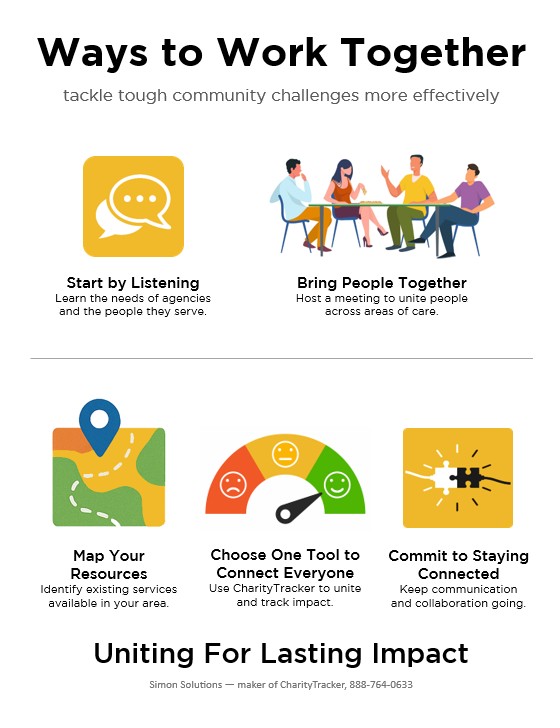
Before jumping in with solutions, take the time to truly listen. Pay attention to the challenges that agencies are navigating and the concerns people are voicing. Ask thoughtful questions to uncover what individuals genuinely need, rather than assuming you already know the answers.
Listening isn’t just about hearing words—it’s about showing empathy, understanding context, and acknowledging their experiences. This approach not only helps you gain deeper insights but also builds trust, which is the essential foundation for meaningful collaboration.
Organize a gathering that unites churches, shelters, food banks, schools, and community leaders in one space. These face-to-face connections are powerful tools for building trust, fostering collaboration, and creating a sense of unity among groups with a shared mission.
By bringing together diverse perspectives and resources, you can turn collective concern into a clear, actionable purpose. This kind of collaboration lays the groundwork for stronger partnerships and more meaningful community impact.
Once you've connected, the next step is to assess the existing services and programs your community already offers. This process, often called resource mapping, involves identifying every available asset—from food pantries and shelters to after-school programs and mental health services.
Creating a comprehensive map reveals service gaps, reduces redundant efforts and overlap, and ultimately helps you connect people to the right support much faster. It ensures efforts are directed where they're most needed rather than duplicated.
Opt for a unified platform—like CharityTracker—to ensure everyone stays on the same page. Using a shared tool provides consistent visibility across teams, making it easier to coordinate efforts, track progress, and foster effective collaboration.
With everyone accessing the same up-to-date information, tasks become more streamlined, and obstacles can be addressed more efficiently, ensuring a stronger, more cohesive approach to achieving your goals.
Effective collaboration isn’t a one-time project or a single meeting; it's a continuous journey of building and strengthening relationships. To ensure your partnerships flourish, it's essential to maintain regular communication through scheduled gatherings, shared progress updates, and open channels for ongoing dialogue.
These consistent touchpoints help keep everyone aligned, motivated, and engaged. As trust and understanding grow between partners, your collective impact will deepen and become more significant over time.
To support you, we’ve included a one-page flyer you can use to introduce others to this community-driven approach. It’s a simple way to share the vision of helping people thrive—not just survive.
We also encourage you to invite partners to a quick CharityTracker demo. When people see how connected care works in real time, the vision becomes tangible—and momentum builds fast.
Building strong partnerships is an ongoing process that requires effort and commitment. It involves maintaining regular communication through scheduled meetings, shared updates, and open dialogue to ensure alignment and engagement among all parties. Consistent interactions are key to fostering trust and understanding, which are the foundation of successful collaborations.
Over time, these consistent efforts help deepen the connection between partners, leading to greater collective impact. By prioritizing open communication and strengthening relationships, partnerships can evolve into powerful, meaningful alliances that achieve shared goals and create lasting value.
